The Data Silo Problem
Data is the key to better decision-making, smarter business strategies, and real-time customer insights. But what happens when data is trapped in separate systems and can’t be accessed easily? That’s where data silos become a major issue.
Data silos occur when different departments store data in their own systems without sharing it efficiently. Instead of a single source of truth, companies end up with fragmented, inconsistent, and outdated information. This slows down operations, increases costs, and leads to poor decision-making.
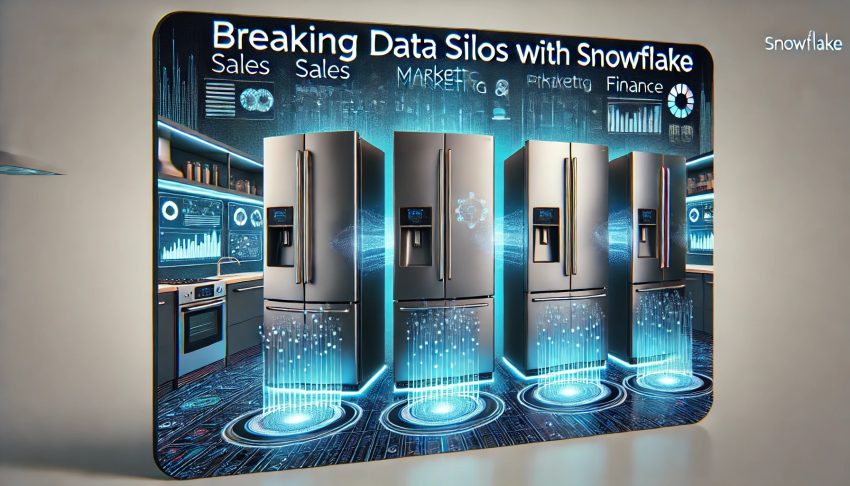
Metaphor: Data Silos Are Like Fridges in Different Rooms
Imagine you live in a house with three kitchens.
- The first kitchen has drinks.
- The second kitchen has fruits and veggies.
- The third kitchen has frozen meals.
Now, every time you want to make dinner, you have to run between all three kitchens, grab the ingredients, and somehow make them work together. It’s inefficient, time-consuming, and frustrating.
That’s exactly how data silos work. Each department has its own fridge (database), but no one can easily grab what they need without running around, copying files, and manually merging everything.
Now, imagine Snowflake as a super fridge where everything is stored in one place—fresh, organized, and easy to access. No more running around. Just instant access to everything you need, when you need it. That’s modern data management with Snowflake and Data Mesh. 📊
Thankfully, modern solutions are changing the game. By eliminating data silos, they help businesses connect information, improve collaboration, and unlock valuable insights.
Let’s break it down and explore how Snowflake databases and Data Mesh solve the problem of data silos once and for all.
What Are Data Silos?
Imagine working at a big company where every department stores its own data separately:
- 📊 Sales keeps customer order history in one system.
- 📢 Marketing tracks website visits and ad clicks in another tool.
- 💰 Finance manages revenue and expenses in a completely different database.
Since these systems don’t talk to each other, it’s impossible to get a complete picture of the business without manually merging data from multiple sources.
🔍 Example of a Data Silo Issue:
Marketing runs an ad campaign targeting customers who visited the website but didn’t buy anything. However, they don’t have access to in-store purchase data, so they end up targeting people who already bought the product—wasting budget and missing new opportunities.
Why Are Data Silos a Problem?
Data silos slow businesses down and create unnecessary complications. Here’s why they’re a big deal:
🚫 Lack of Real-Time Insights – Teams work with outdated or incomplete information, leading to delayed and ineffective decisions.
📊 Inconsistent Data – Sales, Marketing, and Finance might have different numbers for the same metric, causing confusion.
💰 Increased Costs – Running separate databases and IT infrastructures for each department is expensive.
📉 Missed Opportunities – Without a unified view of my data, businesses can’t spot trends, optimize strategies, or improve customer experiences.
How Snowflake Fixes Data Silos
1. Centralized Cloud Data Platform
The Snowflake system eliminates silos by storing all data in one place, making it instantly accessible across teams. No need to merge spreadsheets manually or run complex database queries.
2. Secure Data Sharing Without Duplication
With Snowflake data sharing, departments can access real-time data without duplicating or moving it—saving storage costs and improving efficiency.
3. Multi-Cloud and Scalable
Unlike legacy systems like Oracle, a Snowflake database scales automatically based on business needs, ensuring smooth performance without infrastructure limitations.
4. Data Mesh Compatibility
Snowflake supports Data Mesh principles, allowing companies to structure their data as products that are easy to manage, share, and govern.
What Is Data Mesh and How Does It Help?
Data Mesh is a modern data architecture designed to decentralize data management. Instead of treating data as a massive, centralized asset, Data Mesh organizes it into domain-specific data products that teams can manage independently.
How Data Mesh Works with Snowflake:
✅ Source-Aligned Data Products – Raw data stored in Snowflake, structured for easy access.
✅ Curated Data Products – Cleaned and organized data, ready for business use.
✅ Consumer-Aligned Data Products – Data customized for different business needs.
✅ Reader Data Products – Data designed specifically for reporting and visualization tools.
With Snowflake’s flexible architecture, businesses can implement Data Mesh and avoid data silos by making sure that every team owns and manages their data properly.
For example, using Data Mesh Manager, it is possible to consume data products (data as a product) from each and all departments! A replica of the source data is placed in Data Mesh as a Source Aligned Data Product and from there the data is ready for consumption:

For more information about Data Mesh and BI Analysts: The Future of Analytics in Data Mesh: Trends and Opportunities
Real-Life Example: E-Commerce Business Fixing Data Silos with Snowflake
The Problem:
A retail company sells products both online and in physical stores. However, their data is siloed:
- Online sales are tracked in an e-commerce platform.
- In-store purchases are stored in a POS (Point of Sale) system.
- Marketing campaigns are based on website visits and email responses.
Since these systems don’t talk to each other, the company struggles to understand customer behavior, leading to inefficient marketing and inventory management.
The Solution:
🚀 Migrating to a Snowflake Database – All customer, sales, and marketing data are stored in one centralized Snowflake system.
📡 Using Data Mesh – The company creates data products for different departments, ensuring easy access without unnecessary duplication.
🔍 Real-Time Insights – Marketing can now see both online and in-store purchases, allowing them to target customers more effectively.
📉 Cost Reduction – By eliminating separate databases, IT infrastructure costs drop by 30%, while performance improves dramatically.
Snowflake vs. Data Silos: Key Differences
| Feature | Data Silos (Old Way) | Snowflake + Data Mesh (New Way) |
| Data Storage | Separate systems for each department | Unified Snowflake data warehouse |
| Collaboration | Difficult due to disconnected databases | Easy access with secure data sharing |
| Scalability | Limited, expensive to expand | Auto-scales with cloud computing |
| Cost Efficiency | High costs due to duplicate storage | Reduced costs with pay-as-you-go pricing |
| Real-Time Analytics | Requires manual merging of data | Instantly available insights |
Breaking Free from Data Silos
Data silos hold businesses back by creating information barriers, inefficiencies, and missed opportunities. Traditional systems like Oracle struggle to keep up with modern data demands, leading to fragmented, outdated, and costly workflows.
By adopting Snowflake data solutions and implementing a Data Mesh approach, organizations can:
✅ Centralize their data in a Snowflake database for easy access.
✅ Enable real-time collaboration between departments.
✅ Scale effortlessly with Snowflake’s cloud-native architecture.
✅ Ensure secure and structured data sharing without duplication.
In today’s data-driven world, breaking free from silos isn’t just an option—it’s a necessity for growth.
Learn more about Data Silos

I’m specializing in Data Integration, with a degree in Data Processing and Business Administration. With over 20 years of experience in database management, I’m passionate about simplifying complex processes and helping businesses connect their data seamlessly. I enjoy sharing insights and practical strategies to empower teams to make the most of their data-driven journey.